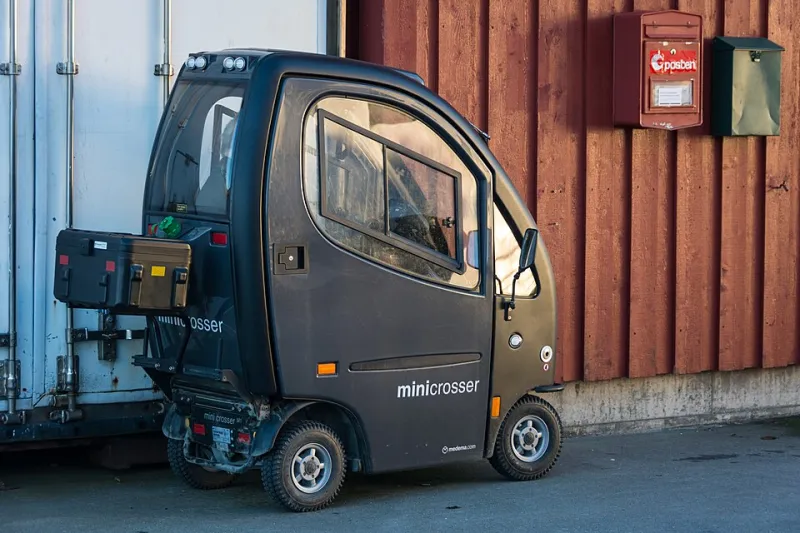
Before You Shake on That Used Scooter Deal: A Buyer's Checklist That Could Save You Hundreds

Photo: elderly person inspecting second hand mobility scooter outdoors, via c8.alamy.com
There's no getting around it: a new mobility scooter is a proper investment. So when you spot a second-hand model on Gumtree for a third of the price, or a part-exchange deal at a local dealer, it's tempting to jump straight in. And sometimes that's exactly the right move — plenty of used scooters out there have barely been off the drive.
But the second-hand market has its fair share of lemons too, and unlike a car, a scooter doesn't come with an MOT history you can check online. Here's our honest guide to separating the bargains from the bangers.
Start With the Batteries — Because They're the Expensive Bit
Batteries are the heart of any scooter and, at £150 to £400 a pair, the first thing you should interrogate. Ask the seller how old they are and how the scooter's been used. A machine that's sat unused in a garage for a year has likely suffered more battery damage than one that's been ridden daily.
The test is simple enough: charge the scooter fully, then take it for a decent run. A healthy set should manage the manufacturer's stated range — or at least a good chunk of it — without the gauge plummeting. If the needle drops like a stone after a mile, or the scooter cuts out on gentle inclines, budget for replacements immediately. Then knock that cost off your offer, or walk away.
One more red flag: non-branded or mismatched batteries. If someone's fitted a cheap generic pair from the internet, assume the worst.
Listen to the Motor, Feel the Frame
Take the scooter for a proper spin — not just up and down the pavement outside. Here's what to pay attention to:
- Grinding or whining noises from the transaxle often mean worn brushes or gearbox trouble — a repair that can run into three figures.
- Jerky or hesitant acceleration can point to a failing throttle pot or controller. Controllers are pricey, so treat this seriously.
- Burning smells after a short run suggest an overworked motor. That's a no from us.
Then give the frame a once-over. Check for cracks around the steering column, welding points and the seat post. Rust is one thing; structural cracks are quite another. Look under the deck for evidence of impact damage — kerb strikes and tip-overs leave their marks, and a bent chassis can affect handling and safety.
The Questions Worth Asking Any Seller
Whether you're dealing with a private seller or a dealer, these five questions will tell you a lot:
- How old is the scooter, and are you the first owner?
- Do you have the original paperwork, charger and manuals?
- How many charge cycles have the batteries done, roughly?
- Has it been serviced, and by whom?
- Why are you selling?
Most answers you can take at face value, but a vague or evasive response on servicing history should make you dig deeper. A scooter that's been looked after will usually come with a folder of invoices and a charger that isn't held together with tape.
What's Fair Money in the UK Market?
As a rough rule of thumb, a three- to five-year-old boot scooter in good nick tends to fetch around 40–60% of its new price, while larger road-legal 8mph models hold value slightly better because they cost more to begin with. Anything being sold "spares or repairs" should be priced accordingly — assume the repair bill will be bigger than advertised.
Be wary of prices that seem too good to be true, particularly on class 3 road scooters. Stolen scooters do circulate, so ask for proof of purchase. A legitimate seller won't mind the question.
Why a Dealer Inspection Pays for Itself
Here at Scooters Direct, we regularly inspect and refurbish part-exchange machines before they go back on sale — checking batteries under load, testing motors, and going over brakes, lights and tyres properly. Buying a used scooter that's been through a process like that costs a little more than a stranger's garage find, but you get warranties, a safety check, and someone to ring when something goes wrong.
Even if you've got your eye on a private sale, it's worth paying a local dealer for a pre-purchase inspection. For a modest fee, a qualified engineer can spot a £300 battery and controller problem in twenty minutes. That's hundreds saved before you've handed over a penny.
The Bottom Line
A used scooter can be a brilliant way to regain your independence without breaking the bank — provided you buy with your head as well as your heart. Check the batteries, test the motor, interrogate the history, and don't be afraid to walk away. There's always another scooter; there isn't always another few hundred pounds.