From Keswick to Cardiff: Which British High Streets Actually Welcome Your Scooter?
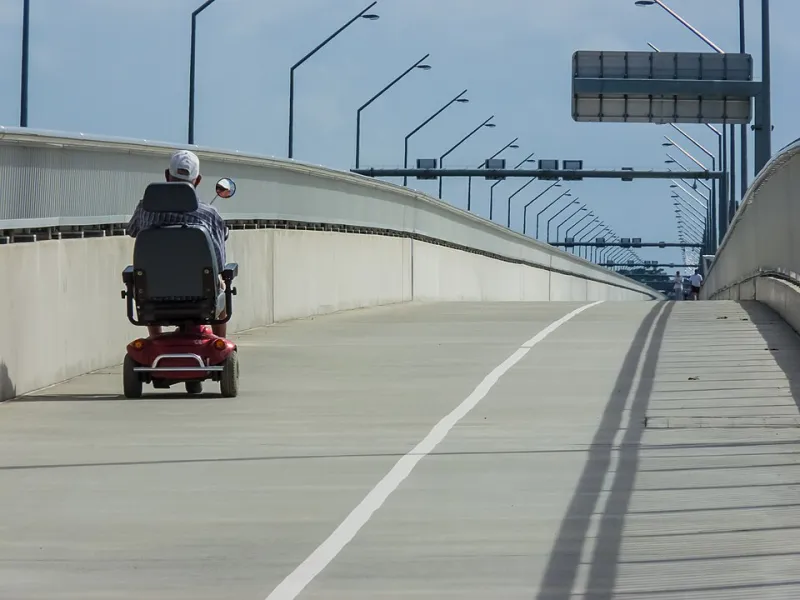
Photo: John Robert McPherson, CC BY-SA 4.0, via Wikimedia Commons
There's a particular kind of frustration that comes with motoring down a high street on your scooter, only to be defeated by a parked van, a narrow alley of A-boards and a kerb that hasn't seen a drop since the 1970s. Accessibility in Britain is, frankly, a postcode lottery — so we've pulled together a regional rundown of the places doing it well, and a few that aren't.
Scotland: Glasgow Leads, Edinburgh Lags
Glasgow's city centre has invested heavily in wider footways along Buchanan Street and Sauchiehall Street, and most of the big retailers have step-free entrances as standard. Edinburgh's Royal Mile is charming but cobbled in stretches — beautiful to look at, less beautiful to cross. Head for the modern developments around St James Quarter instead, where lifts and level access are the rule.
The North East and Yorkshire: Mixed Fortunes
Newcastle's Grainger Market offers flat, wide access and traders who'll happily shuffle a crate or two. In Yorkshire, Leeds has done solid work on pedestrianisation, while smaller market towns like Skipton score points for community spirit — locals report shopkeepers who'll bring stock out to the door without being asked.
The Midlands: Birmingham's Big Wins
Bullring aside, Birmingham's recently reworked high streets in suburbs like Kings Heath have added dozens of dropped kerbs. Nottingham benefits from a largely flat city centre — a genuine blessing for scooter users.
The South East: Brighton Shines
Brighton's seafront promenade is one of the country's great scooter-friendly stretches: flat, wide and properly maintained. Shop access along the Lanes is patchier, with listed buildings and narrow doorways working against you.
Wales and the South West: Reader Verdicts
Cardiff's city centre ranks well for ramp access and level paving, while readers in Cornwall have told us that Truro's hills and narrow pavements make it hard going without a robust, road-legal model.
The Worst Offenders — As Voted by You
Our postbag has been full on this one. The recurring complaints:
- A-boards and café furniture cluttering already-narrow pavements, particularly in market towns
- Pavement parking that forces scooter users into the road
- Single-step entrances at independent shops, where a portable ramp would cost the owner less than a round of drinks
How to Lobby Your Council (It Works)
You don't need a campaign team — you need persistence and paperwork. Find your council's highways department and ask specifically about their Local Transport Plan and any dropped-kerb policy. Requests tied to a named location, a photograph and a note of how the problem affects daily life get taken far more seriously than general grumbles. Your ward councillor is your ally; most are genuinely unaware of how a two-inch kerb can make a high street unusable. The Equalities Act gives you decent leverage — councils have a duty to consider disabled access.
Tell Us About Your Town
This roundup is a starting point, not the final word. We want your reviews: which high streets roll out the welcome mat, and which ones leave you stranded outside? Send us your town, your verdict and a photo if you have one, and we'll feature the best submissions in a reader-led follow-up. After all, nobody knows your patch better than the person navigating it every week.